
Landing a position at a proprietary trading firm is one of the most coveted careers in finance. If you’re serious about joining an elite trading organization, understanding what it takes to succeed is crucial. This comprehensive guide walks you through everything you need to know about proprietary trading firm jobs and how to secure your position in 2026.
What Are Proprietary Trading Firms?
Before diving into the hiring process, let’s clarify what proprietary trading firms are and why they’re so desirable.
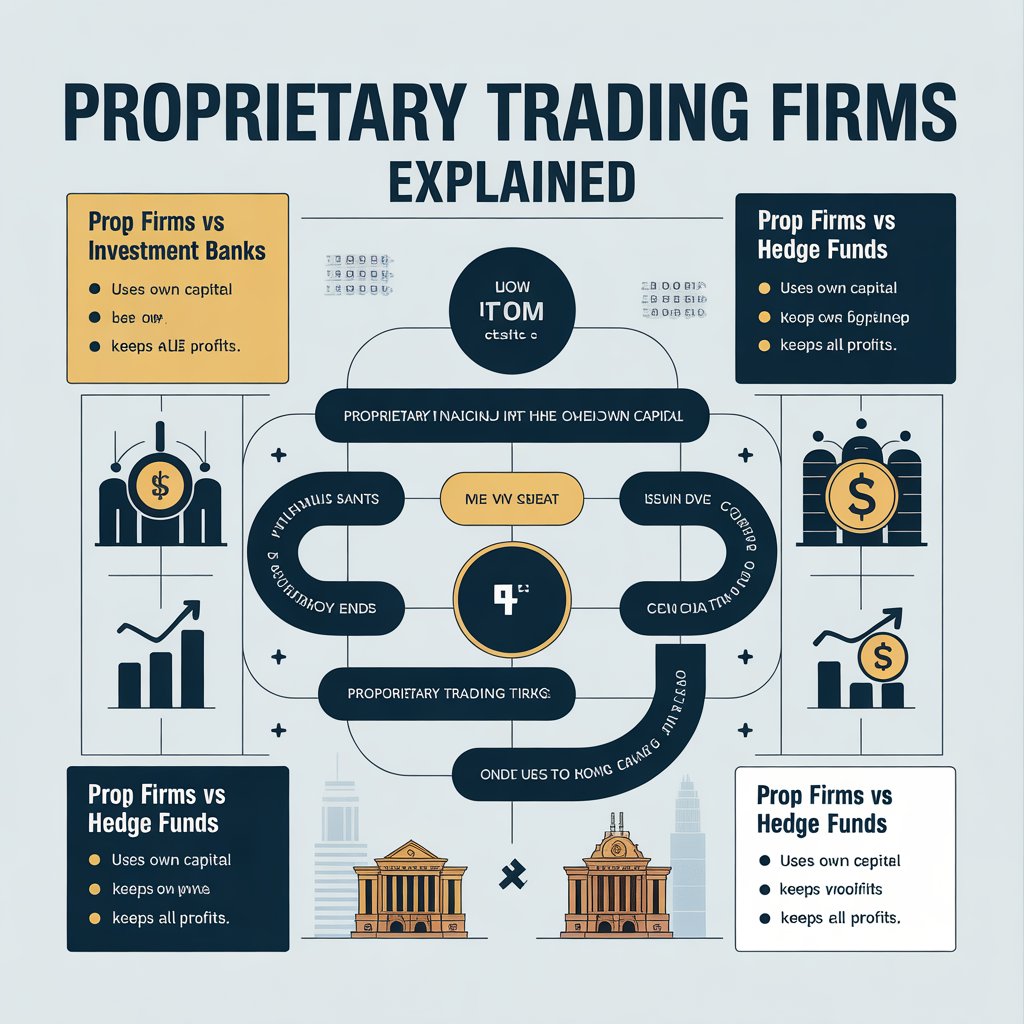
Proprietary trading firms (often called “prop firms”) are financial institutions that trade securities, derivatives, currencies, and commodities using their own capital rather than client money. Unlike investment banks or hedge funds that manage client assets, prop firms keep profits generated from trading activities.
The appeal is straightforward: traders at these firms have the potential to earn substantial compensation based on their trading performance. Top traders at leading firms can earn six or seven figures annually, with the opportunity to grow significantly as they gain experience and prove their trading prowess.
Understanding the Proprietary Trading Career Path in 2026
The prop trading career path has evolved considerably. In 2026, there’s greater emphasis on technology, quantitative skills, and algorithmic trading than ever before. However, traditional discretionary trading remains an important avenue.
Traditional Career Progression
The typical prop trading career path follows this trajectory:
- Entry-Level Trader – Your first 1-2 years learning the ropes
- Senior Trader – Increased capital allocation and autonomy after 2-4 years
- Desk Head/Managing Partner – Leadership role overseeing other traders
- Partner/Equity Owner – Ownership stake in the firm
Success at each level depends on consistent profitability, risk management discipline, and team contribution.
Top Proprietary Trading Firms Hiring in 2026
To understand top prop trading firms, you should know the major players in the industry. These firms are known for rigorous hiring standards, competitive compensation, and elite trading cultures:
- Optiver – Amsterdam-based market maker with global presence
- Citadel Securities – Sophisticated technology and quantitative focus
- Jump Trading – Algorithmic and systematic trading powerhouse
- DRW (Derivative Research & Wealth) – Multi-asset trading with strong culture
- Hudson River Trading (HRT) – Technology-forward trading firm
- IMC – Amsterdam-based quantitative trading leader
- Tower Research Capital – Quantitative and algorithmic trading
- Akuna Capital – Fast-growing prop firm with multiple locations
- Peak6 – Chicago-based with diverse trading strategies
- Wolverine – Established firm with deep market expertise
These firms consistently recruit talented traders and engineers. Getting hired at any of these organizations significantly boosts your credibility and earning potential.
Critical Proprietary Trading Requirements
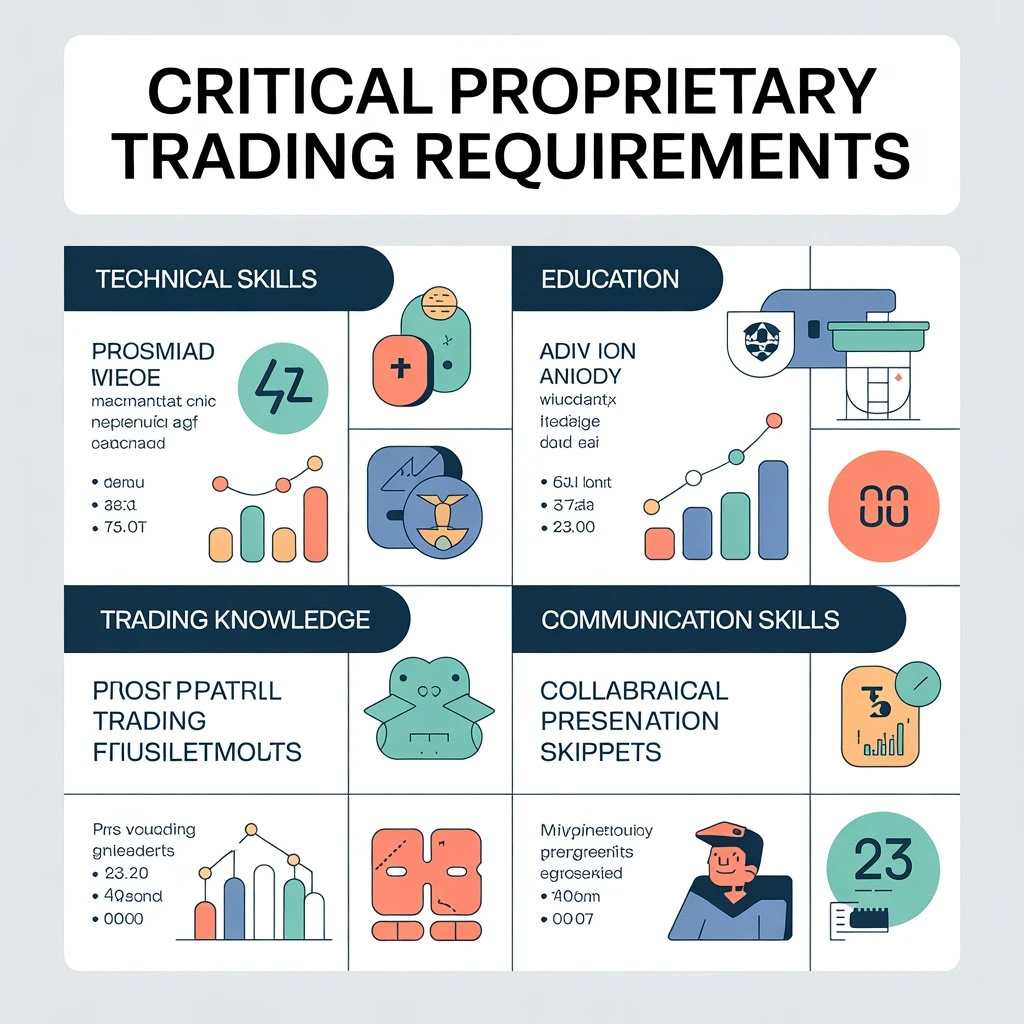
What do top prop trading firms look for when hiring? Understanding prop trading requirements is essential for tailoring your application and interview preparation.
1. Technical Skills and Quantitative Abilities
Modern prop firms heavily prioritize quantitative skills. You should have:
- Strong Mathematics Background – Statistics, probability, linear algebra
- Programming Skills – Python, C++, Java, or similar languages
- Financial Mathematics – Options pricing, portfolio theory, risk metrics
- Statistical Analysis – Hypothesis testing, regression analysis, data interpretation
2. Education and Academic Credentials
While not mandatory, most traders at top proprietary trading firms have impressive educational backgrounds:
- Degree in STEM – Mathematics, Physics, Engineering, or Computer Science preferred
- Advanced Degrees – MBA or graduate degrees in Finance/Economics valuable
- Top Universities – Recruiting heavily from MIT, Stanford, Berkeley, CMU, Oxford, Cambridge
- Competition Success – Math olympiad, programming competitions, finance competitions
3. Trading Knowledge and Market Understanding
You need foundational knowledge of financial markets:
- Asset Classes – Understanding stocks, futures, options, forex, cryptocurrencies
- Market Mechanics – Order types, execution venues, market structure
- Trading Strategies – Arbitrage, momentum, mean reversion, statistical arbitrage
- Risk Management – Position sizing, drawdown management, portfolio risk
4. Communication and Interpersonal Skills
Technical skills alone aren’t sufficient:
- Clear Communication – Explain complex concepts simply
- Team Collaboration – Work effectively with diverse backgrounds
- Problem-Solving – Tackle challenges systematically
- Emotional Intelligence – Handle pressure and manage risk emotionally
How to Join a Proprietary Trading Firm: A Step-by-Step Guide
Now for the practical guidance on how to join a prop trading firm. Follow these steps to maximize your chances:
Step 1: Build Your Foundation (6-12 Months Before Applying)
Develop Technical Skills
Start by strengthening your quantitative abilities. If you lack a strong math background, dedicate time to:
- Take online courses in probability and statistics
- Learn Python programming through platforms like Coursera or Udacity
- Study financial mathematics and derivatives pricing
- Practice coding challenges on LeetCode and HackerRank
Study Financial Markets
Gain practical market knowledge by:
- Reading books like “A Man for All Markets” by Edward Thorp or “Market Wizards” by Jack Schwager
- Following financial news and understanding macroeconomic drivers
- Practicing paper trading on simulation platforms
- Developing a personal trading strategy you can explain coherently
Strengthen Your Resume
Ensure your resume highlights:
- Relevant internships (finance, tech companies, quantitative roles)
- Strong academic performance (GPA 3.5+ from respectable university)
- Technical projects demonstrating coding ability
- Competition participation (math olympiad, trading competitions)
- Leadership experience and achievements
Step 2: Target the Right Firms
Not all prop firms are equally selective, and different firms value different skills.
Research the Firm Culture
Before applying, understand each firm’s focus:
- Market-Making Firms – Emphasize speed, execution, and technology
- Quantitative Trading Firms – Prioritize mathematical modeling and algorithms
- Discretionary Trading Firms – Value market intuition and experience
- Specialized Firms – Focus on specific assets or strategies
Visit company websites, read recent news, and connect with current employees on LinkedIn to understand their culture.
Identify Your Fit
Consider your strengths:
- If you’re strong in programming and math, pursue quantitative firms
- If you have strong market intuition and research skills, consider discretionary trading
- If you’re interested in speed and technological innovation, target market makers
- If you’re generalist, seek firms with diverse trading styles
Step 3: Navigate the Application Process
Getting Your Foot in the Door
Most prop trading firm jobs require:
- Online Application – Submitting resume and cover letter through company website
- Referrals – Employee referrals significantly increase interview chances
- University Recruitment – Attend campus recruiting events if you’re a student
- Networking – Connect with traders at conferences and industry events
Leverage Your Network
Don’t underestimate networking:
- Reach out to alumni working at your target firms
- Attend trading competitions and networking events
- Connect on LinkedIn with relevant professionals
- Ask for informational interviews to learn about the firm
The reality: referrals dramatically increase your chances. Many top traders enter through personal connections. If you lack connections, focus on building them through events and online communities.
Step 4: Ace the Interview Process
The prop trading recruitment process typically includes multiple stages:
Initial Screening
Your first interaction might be:
- Phone Screening – Usually with HR or a junior trader
- Coding Assessment – For tech-focused roles, expect algorithmic coding problems
- Trading Simulation – Some firms use initial trading games to assess decision-making
How to Prepare:
- Practice coding on LeetCode (medium to hard level problems)
- Understand common trading simulation mechanics
- Research the firm thoroughly before the call
- Prepare clear examples of your trading strategy and experience
Technical Interview
This is where prop firms assess your quantitative abilities:
Expect questions like:
- “How would you price an option using Monte Carlo simulation?”
- “Explain the Black-Scholes model and its limitations”
- “Design a trading strategy for a specific market scenario”
- “Walk me through a Python solution to this algorithmic problem”
Preparation tips:
- Review options pricing and risk management concepts
- Practice explaining mathematical concepts clearly
- Prepare a portfolio of trading strategies with backtesting results
- Be ready to code solutions in real-time
Trading Simulation/Assessment
Many firms conduct trading simulations where you:
- Trade in a virtual market environment
- Manage a virtual portfolio over hours or days
- Make real-time decisions with limited information
- Are evaluated on profitability and risk management
How to excel:
- Manage your risk carefully—don’t blow up your account
- Stay disciplined and stick to your strategy
- Avoid emotional decision-making
- Document your reasoning for trades
- Focus on consistent profitability over maximum gains
Behavioral Interview
Senior traders want to understand:
- How you handle losses and setbacks
- Your problem-solving approach
- Your communication abilities
- Your attitude toward collaboration and feedback
- Your genuine interest in trading
Key tips:
- Tell compelling stories from your past experiences
- Demonstrate self-awareness about strengths and weaknesses
- Show genuine enthusiasm for trading and markets
- Ask thoughtful questions about the firm and role
Getting Hired at Top Proprietary Trading Firms: Key Success Factors
Beyond the formal process, several factors determine who gets hired:
1. Demonstrated Trading Profitability
Top proprietary trading firms want evidence you can make money:
- Share track records from paper trading or real trading
- Explain your trading logic and performance metrics
- Discuss losses and what you learned from them
- Provide backtesting results with transparency about methodology
2. Continuous Learning Mindset
Firms seek people who:
- Read voraciously about markets and technology
- Stay updated on industry developments
- Pursue relevant certifications (CFA, FRM)
- Experiment with new trading strategies
- Embrace feedback and iteration
3. Strong Work Ethic and Resilience
Trading is demanding:
- Show you can handle high-pressure situations
- Demonstrate commitment to improvement
- Explain how you’ve overcome failures
- Exhibit persistence in pursuing your goals
4. Cultural Fit
Finally, firms need people who fit their culture:
- Some firms value aggressive traders; others prefer methodical traders
- Some emphasize competition; others emphasize collaboration
- Understanding firm values helps you present yourself authentically
- Be genuine—forced fit leads to quick exits
Common Mistakes to Avoid When Pursuing Proprietary Trading Jobs
Learn from others’ missteps:
Mistake #1: Unrealistic Expectations
Many aspiring traders overestimate their chances. Top firms receive thousands of applications for a few positions. Be prepared for rejection and apply broadly.
Mistake #2: Weak Technical Skills
Don’t apply without genuinely strong fundamentals. Firms quickly identify candidates who are unprepared. Invest time in real skill development.
Mistake #3: Ignoring Market Knowledge
You can’t compensate for lack of market understanding with just coding skills. Learn about actual trading.
Mistake #4: Poor Communication
Even brilliant traders who can’t explain their thinking won’t advance. Practice articulating your ideas clearly.
Mistake #5: Weak Network
Don’t rely entirely on online applications. The vast majority of prop trading firm jobs are filled by referrals or people with existing connections.
Mistake #6: Inconsistent Brand
Make sure your LinkedIn, GitHub, personal website, and interviews all present a coherent professional image.
Alternative Paths to Proprietary Trading Firm Jobs
If direct hiring seems daunting, consider these paths:
Junior Trading Programs
Many top proprietary trading firms offer structured programs for recent graduates. These programs provide:
- Mentorship from experienced traders
- Structured training in their strategies
- Clear path to full-time trading roles
- Benefits and compensation tied to performance
Examples include Citadel’s Academy, Jump’s training program, and Optiver’s graduate schemes.
Trading Competitions
Participate in prestigious trading competitions:
- Imperial College Trading Competition
- University of Chicago Trading Competition
- Morgan Stanley College Investment Competition
Winners often receive direct job offers or guaranteed interviews.
Hedge Fund to Prop Firm Path
Some traders transition from hedge funds to prop firms. This path:
- Builds real trading experience
- Develops professional networks
- Creates credibility and track record
- Sometimes leads to direct recruitment by prop firms
Starting at a Smaller Prop Firm
Not all prop firms are mega-institutions. Smaller, regional firms often:
- Have less competitive hiring processes
- Offer mentorship from experienced traders
- Provide faster advancement opportunities
- Sometimes grow into major firms
Success at a smaller firm builds experience and credibility for larger firms.
Industry Trends in 2026: What’s Changed
The landscape for proprietary trading firm jobs has evolved:
Increased Technology Focus
Top proprietary trading firms now heavily emphasize:
- Machine learning and AI in trading strategies
- Cloud infrastructure and distributed computing
- Real-time data processing at scale
- Cybersecurity and system reliability
Candidates with strong tech backgrounds have significant advantages.
Growing Remote Opportunities
Unlike the past, some prop trading career paths now include remote work:
- Some firms offer hybrid or fully remote positions
- Technology enables trading from anywhere
- This expands opportunities beyond major financial hubs
Diversifying Backgrounds
Firms increasingly recruit from:
- Physics and engineering backgrounds
- Computer science and software engineering
- Data science and machine learning fields
- Non-traditional backgrounds
You don’t need a finance degree anymore.
Emphasis on Compliance and Risk
Post-2008 and recent scandals have increased focus on:
- Robust risk management systems
- Regulatory compliance frameworks
- Ethical trading practices
- Sustainable business models
Candidates who understand these frameworks are attractive.
Final Thoughts: Your Path to Proprietary Trading Success
Getting hired at top proprietary trading firms requires preparation, persistence, and strategic thinking. There’s no single formula—different people succeed through different paths.
The key is to:
- Build genuine skills in quantitative analysis, programming, and market understanding
- Develop trading ability through paper trading, competitions, or small personal accounts
- Network strategically to create opportunities beyond online applications
- Prepare thoroughly for interviews and assessments
- Stay persistent despite inevitable rejections
- Continue learning throughout your career
The opportunity to trade with a firm’s capital and earn substantial compensation is compelling. But remember: top proprietary trading firms succeed because they hire talented people with genuine ability and passion for trading. If you develop real skills and demonstrate consistent profitability, firms will notice.
Start today. Build your skills. Network genuinely. Apply strategically. The proprietary trading firm jobs you’re targeting are within reach with dedication and smart preparation.
FAQ: Proprietary Trading Firm Jobs
Q: Do I need a finance degree to get hired at a prop firm?
A: No. Many successful traders have degrees in mathematics, physics, computer science, or engineering. What matters is your analytical ability and trading skills.
Q: How long does the hiring process typically take?
A: 2-6 weeks from application to offer. Some firms move faster (1-2 weeks), others slower (2-3 months). Top firms often have multiple rounds of interviews.
Q: What’s the typical starting compensation?
A: Junior traders at major firms might start with $50-100K base plus significant bonuses tied to trading performance. Top traders at elite firms can earn significantly more.
Q: Can I join a prop firm without prior trading experience?
A: Yes. Most junior hires lack professional trading experience. What matters is demonstrated ability through simulations, competitions, paper trading, or education.
Q: What percentage of applicants get hired?
A: Top firms like Citadel and Jump Trading have acceptance rates below 1%. Mid-tier firms might be 1-5%. Smaller firms 5-15%. Realistic expectations are important.
Q: Should I focus on one firm or apply to many?
A: Apply to multiple firms. However, customize each application and interview preparation to the specific firm. Generic applications rarely succeed.
Q: How important is networking for getting hired?
A: Very important. Research shows 50-70% of prop trading hires come through referrals or personal networks. Don’t ignore the application process, but definitely pursue networking simultaneously.